
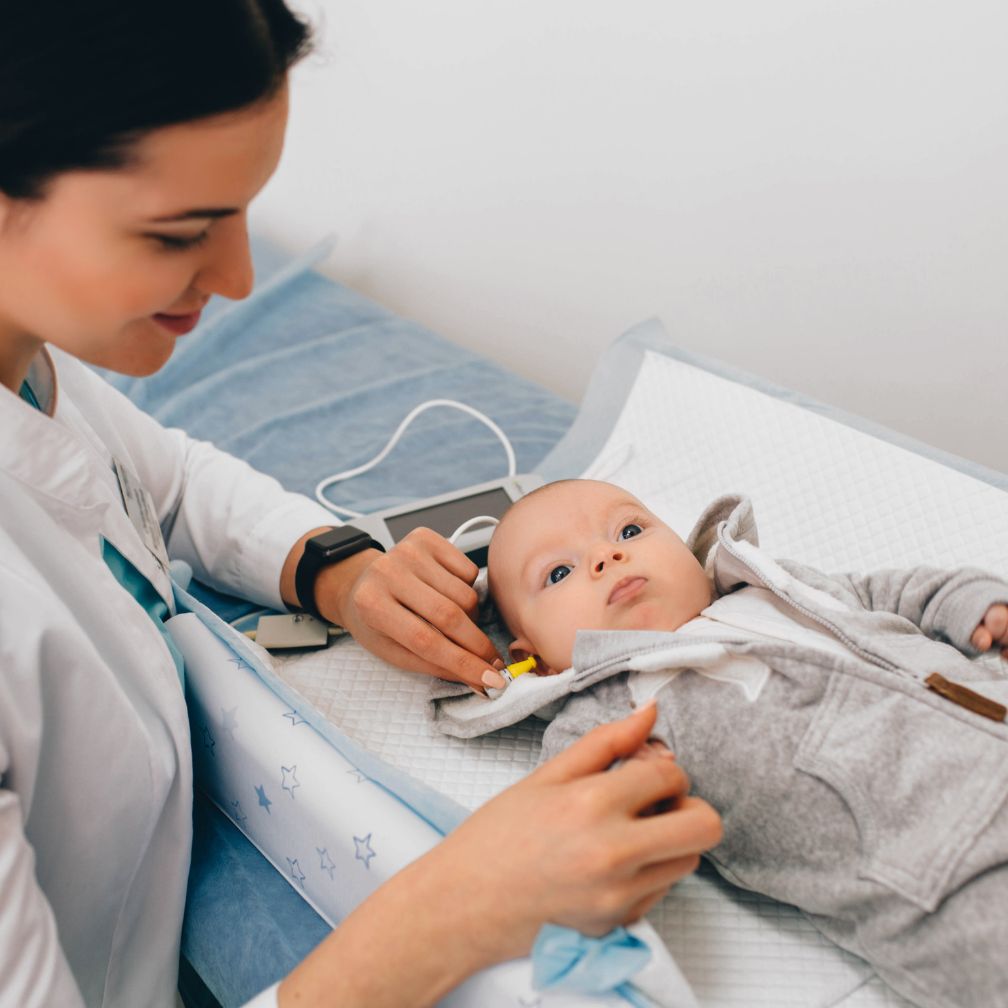
For both parents of a young infant, hearing a medical report of infant hearing loss often feels distressing and daunting. Fortunately, the reassuring perspective dictates that through timely checks and early help, babies with hearing issues can realize remarkable achievements. Without question, these babies can construct clear speech, social competencies, and enduring bonds within their community, shaping a truly wonderful life!
Pairing pediatric hearing aids with cochlear implant systems represents two premier clinical instruments for assisting infants with hearing deficits. Further down, we explore their underlying operational methods to assist you in deciding which pathway best serves your youngster.
Understanding Infant Hearing Loss
Auditory challenges in babies routinely trace back to multiple medical influences, including:
- Targeted genetic mutations (even in families with no history of impairment)
- Documented prenatal viral exposures such as cytomegalovirus (CMV) or rubella
- Major delivery difficulties, such as acute oxygen deprivation or premature delivery
- Certain clinical medications prescribed during neonatal intensive care stays
What is the primary objective for parents? Prompt medical diagnosis. Owing to this mandate, babies in the United States receive standardized auditory screening before leaving the hospital. Board-certified pediatric audiologists strictly uphold the standardized “1-3-6” care benchmark:
- Preliminary screening executed within 1 month of birth
- Comprehensive diagnosis established within 3 months
- Therapeutic intervention (employing wearable technology or developmental therapy) started prior to 6 months of life
Executing these procedural steps delivers to infants their best chance for flourishing speech, language acquisition, and cognitive health. Whenever you seek direction on these auditory tests, your child’s pediatrician will gladly advise you!
Deploying Hearing Aids for Newborns
When managing infants presenting with mild to severe hearing deficits, wearable hearing aids frequently serve as the primary intervention. Such compact, fitted instruments intensify sound signals, helping infants distinguish human speech and natural sounds more clearly.
Specialized hearing devices for babies function as:
- Fully cleared and safe for babies merely weeks past delivery
- Crafted featuring soft, gentle, flexible ear molds that adjust alongside the infant’s growth
- Equipped with child-resistant battery compartments and specialized pediatric safety components
- Uniquely calibrated by a specialized pediatric audiologist to mirror your infant’s unique auditory curve
As your baby grows, these hearing aids demand periodic adjustments to preserve physical comfort and functional efficacy.
Cochlear Implants for Infants
If an infant is diagnosed with severe to profound sensorineural hearing loss that fails to respond adequately to conventional hearing aids, specialists routinely suggest a cochlear implant. In contrast to conventional amplification tools, cochlear implant systems:
- Must be surgically installed during a specialized medical procedure
- Bypass damaged parts of the inner ear
- Convert acoustic waves into direct electrical signals that stimulate the auditory nerve directly
State-of-the-art cochlear systems function as:
- Fully FDA-approved for infants aged 9 to 12 months
- Exceptionally effective when paired with early developmental therapy and strong family involvement
- Cleared only after rigorous joint evaluations by a certified audiologist and otolaryngologist
That pre-surgical path incorporates neuroimaging scans, specialized auditory testing, and realistic discussions regarding long-term developmental milestones.
Hearing Aids or Cochlear Implants: Distinguishing Features
- Mild to severe hearing loss: Hearing Aids; Severe to profound hearing loss necessitates Cochlear Implants
- Non-Invasive external placement: Hearing Aids; Surgical internal implantation: Cochlear Implants
- Acoustic volume boosting: Hearing Aids; Digital electrical impulse transformation: Cochlear Implants
- Application starts during early infancy: Hearing Aids; Placement starts at 9-12 months: Cochlear Implants
Hearing Aids vs. Cochlear Implants: Final Thoughts
In the event your infant receives a hearing loss diagnosis, you have options and compassionate guidance. Under the care of specialized pediatric hearing doctors, most children construct speech and language proficiency that rivals their normal-hearing peers.
Whether your youngster qualifies for external hearing aids or surgical cochlear implants, prompt intervention establishes a foundation for lifelong communicative success.
Are you looking for clarity regarding your infant’s hearing development? Call our clinic today for a full evaluation and personalized care plan.