
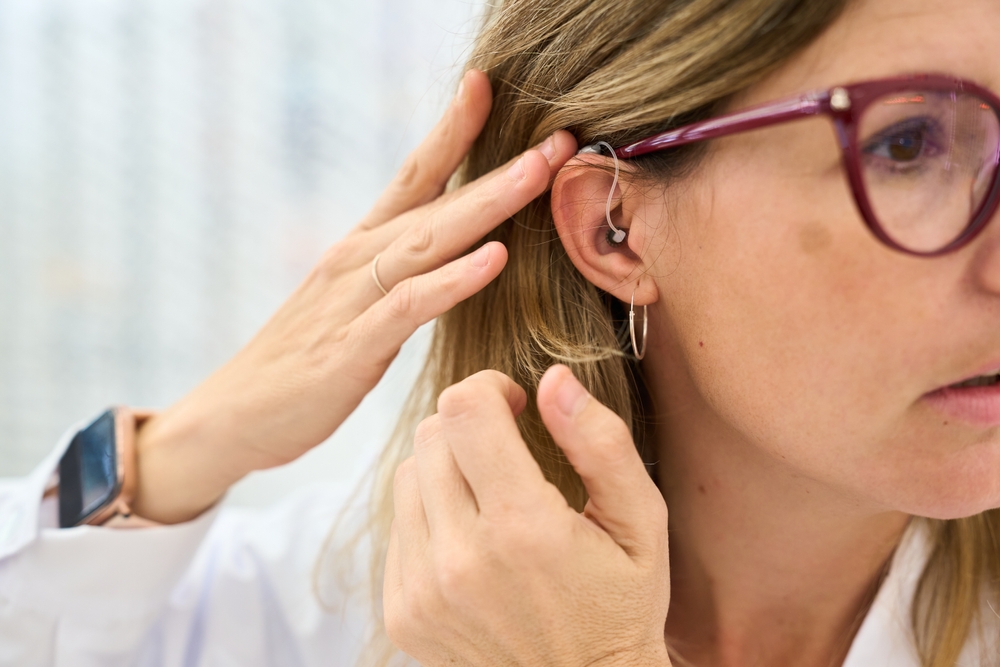
A significant number of patients postpone treating their hearing loss because they harbor concerns regarding device aesthetics and physical comfort. Such reluctance is perfectly natural when you consider past technology! Furthermore, many individuals harbored deep anxieties about social isolation, fearing others would exclude them from discussions based on assumptions of cognitive decline or profound auditory deficits.
Consequently, this outdated, negative stereotype persists, preventing numerous individuals from seeking professional care. The liberating truth is that twenty-first-century auditory tech offers a level of cosmetic elegance and physical comfort that surprises most patients. Thanks to rapid technological evolution, modern devices are remarkably downsized, highly ergonomic, and exceptionally covert.
If you have spent years avoiding an audiologist due to the appearance of old devices, now is the perfect moment to explore today’s sleek alternatives!
Why the Bulky, Obvious Hearing Aid Is a Thing of the Past
If you close your eyes and picture a hearing aid, you might imagine something large, hooked over the ear, and visible from across the room. If that description matches your mental model, your perceptions are anchored in the primitive analog technology of the late twentieth century.
Since then, the entire category has evolved. Unprecedented breakthroughs in microchip architecture, material sciences, and digital signal processing have utterly revolutionized modern aesthetics. The resulting devices are beautifully downsized, highly aerodynamic, and built to match lifestyle needs by remaining completely hidden.
Many of today’s devices sit fully inside the ear canal, making them virtually invisible during everyday conversation. Different configurations sit comfortably behind the ear but feature such a low profile and featherweight build that observers naturally miss them.
Understanding Your Options: A Guide to Contemporary Device Form Factors
If you are curious about the structural choices available for your rehabilitation, here is an accessible overview of current styles:
Deep Canal Solutions: Invisible-in-Canal (IIC)
This specific configuration offers the highest degree of user discretion. IIC devices sit completely inside the ear canal and are custom-made to fit your ear. From a normal conversational distance, they’re essentially invisible. They’re a popular choice for people with mild to moderate hearing loss who prioritize subtlety.
Receiver-in-canal (RIC) / Receiver-in-the-ear (RITE)
This is the most common style today. A microscopic electronic hub is positioned behind the outer ear, anchored by an ultra-thin, transparent lead to a high-fidelity speaker seated inside the canal. To onlookers, this streamlined design closely mirrors fashionable consumer electronics or sports earbuds. Most people won’t notice them unless they’re looking.
Power and Performance: Behind-the-Ear (BTE)
While these models house all electronic components within a casing resting behind the pinna, their dimensions are drastically reduced compared to legacy models. They’re often recommended for more significant hearing loss and offer excellent performance without the bulky appearance people expect.
The bottom line is simple: modern assistive hearing systems are crafted to serve your life quietly, not to draw attention to your ears.
How Current Hearing Technology Outperforms Traditional Amplifiers
The recent metamorphosis of hearing instruments extends far beyond mere cosmetic downsizing. Today, they function more like smart devices than traditional medical equipment. Many variants integrate high-speed Bluetooth protocols, allowing you to route phone calls, podcasts, or multimedia audio straight to your ears without external headphones.
Managed via intuitive phone interfaces, these systems give you the power to mix sound levels or change situational profiles without ever touching your ears. Say you’re walking into a noisy restaurant: You can fine-tune your hearing to match the environment in seconds. Convenient overnight charging systems have permanently replaced the tiny disposable batteries that patients traditionally struggled to replace. You merely dock the devices on a nightstand inductive charger, exactly like replenishing your mobile phone.
Getting Over the Fear and Stigma of Hearing Devices
Even knowing all of this, it’s easy to hesitate. Scheduling an appointment can feel like a profound internal challenge because it represents an open admission of sensory alteration. This mental hurdle can make an individual feel exposed, creating a false impression of losing authority over personal wellness.
Let’s reframe this narrative completely: acquiring a modern acoustic instrument is not an admission of weakness. They are simply tools for managing standard lifecycle changes, which are a normal part of the human experience. Investing in your hearing shows that you are actively deploying advanced resources to support your systemic well-being and social connection.
Imagine wearing a discreet, barely (if at all) visible device and finally being able to follow along in conversation, hear better in crowds, and focus on the things that really interest you. That level of sensory restoration is incredibly liberating!
Discover the Reality of Modern Otolaryngological Solutions
The quickest way to erase your grandfather’s mental model is to physically interact with twenty-first-century hearing tech. We invite you to come in, ask questions, and explore your options with no pressure and no commitment necessary. View this consultation simply as a tactile opportunity to discover just how radically changed this technology has truly become.
You will likely be utterly delighted to discover how microscopic, physically seamless, and high-performing today’s options truly are! Do not let outdated myths delay your wellness—call our specialized practice or book your appointment online today.