
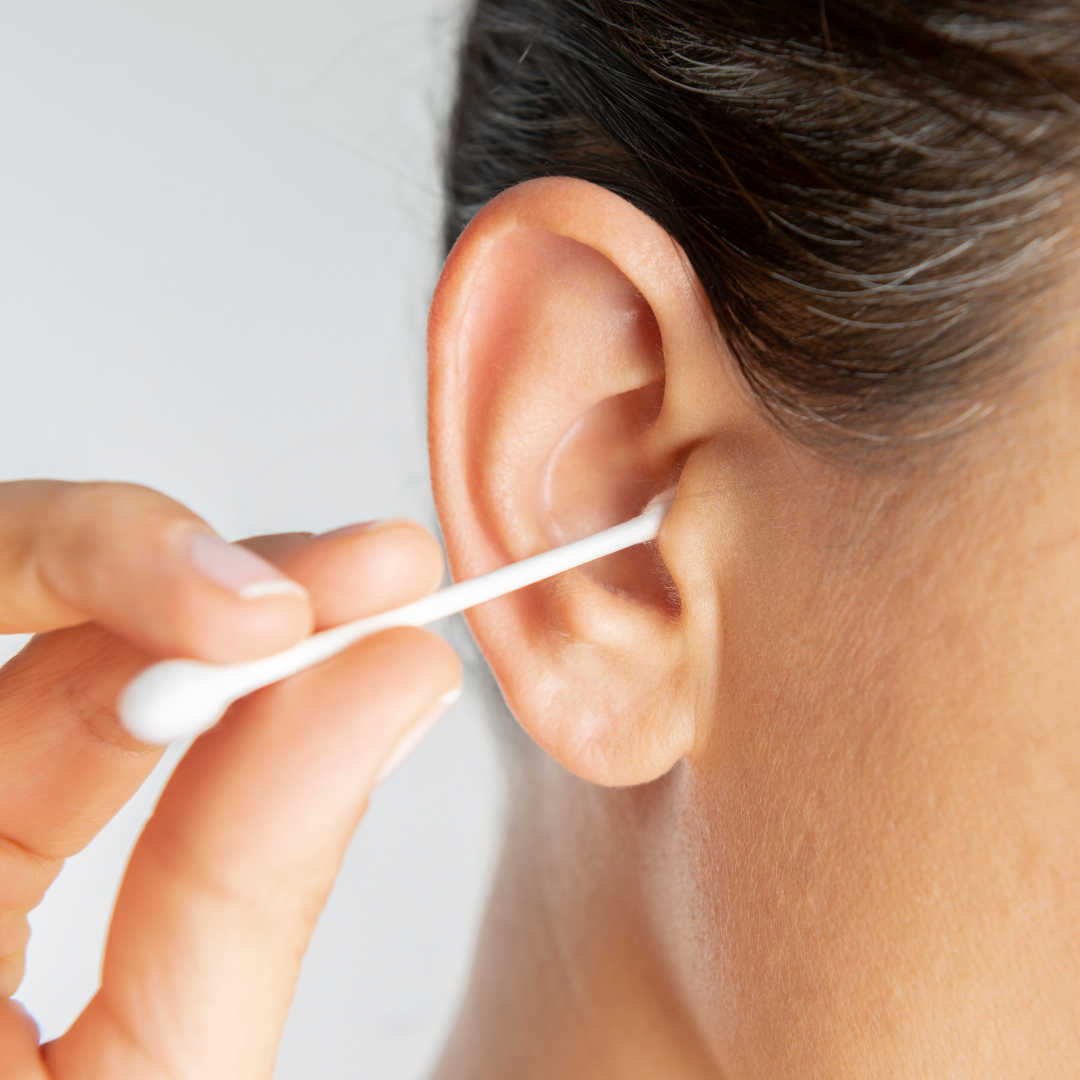
Cotton swabs may seem like convenient ear-cleaning tools, but inserting one into the ear canal can make cleaning harder over time and may damage your ears. We can determine whether earwax actually needs removal and recommend a method suited to your ear health. Most ears do not mandate routine physical scrubbing; yet, if accumulation occurs, we guide patients through safe cerumen management.
The Hidden Dangers of Cleaning Ears with Q-Tips
Earwax, or cerumen, is not dirt. Cerumen collects particulate matter, inhibits microbial proliferation, moisturizes the epithelial lining, and shields sensitive canal tissues. Standard jaw mechanics and lateral skin shedding propel oxidized wax toward the outer meatus, allowing it to dry and wash away during daily washing.
Introducing a cotton swab into the ear pathway severely disrupts the ear’s organic cleaning process. Though the cotton tip may capture superficial debris, it frequently rams the larger wax volume deeper toward the tympanic membrane. Ongoing cotton swab use regularly condenses wax into a solid obstruction, causing a congested feeling that drives repetitive cleaning attempts.
Cotton applicators are suitable for tracing the exterior folds of the ear, but they must remain entirely outside the canal opening.
Potential Ear Damage and Complications from Q-Tips
The delicate dermal lining of the auditory canal is remarkably thin and susceptible to lacerations. Minor physical scratches induce pain, trigger localized bleeding, and invite bacterial colonization, increasing outer ear infection rates. In addition, the cotton head can loosen and become retained as an obstructing foreign object in the ear.
Common mechanical traumas from swabs include:
- Earwax pushed into a deeper impaction
- Epithelial lacerations, inflammation, erythema, or bleeding
- Secondary bacterial otitis externa
- Retained cotton tips or foreign debris inside the canal
- Traumatic puncture or laceration of the eardrum
- Mechanical trauma to the middle-ear ossicles behind the eardrum
- Temporary or permanent hearing changes
- Onset of tinnitus, positional dizziness, or acute ear pain
Though critical trauma is uncommon, an unexpected collision, a sudden slip, or overzealous penetration can cause extensive ear injury.
Recommended Schedules and Timelines for Cerumen Removal
The majority of individuals do not require routine or scheduled cerumen extraction. Healthy ear physiology steadily propels wax toward the surface, where daily hygiene cleans the external ear. Excessive cleaning strips natural oils, inflames delicate canal skin, and substantially elevates the chance of infection or impaction.
Professional removal is necessary when wax obstructs the canal, obscures our view of the tympanic membrane, hinders a hearing aid, or creates physical symptoms.
How to Address Earwax Safely at Home
When cerumen creates no clinical symptoms, leaving the canal alone remains the most prudent approach. Simply cleanse the external ear using a damp, gentle washcloth, allowing the internal canal to clear independently.
When wax needs softening, we may recommend an over-the-counter cerumen-removal product or drops containing ingredients such as mineral oil, glycerin, saline, or carbamide peroxide. Dispense only the directed amount and restrict use strictly to the timeframe specified on the product packaging. Discontinue administration immediately if the solution sparks pain, severe dizziness, skin rash, or worsening ear fullness.
Performing home ear irrigation carries distinct risks and requires prior professional evaluation and hands-on technique instructions. Never utilize motorized oral irrigators or dental water devices in the ear canal. Avoid ear candles, metal scoops, camera-guided tools, hairpins, and home suction devices. Such unregulated implements can cause thermal burns, canal lacerations, eardrum perforations, or deeper cerumen impactions.
Clinical Indicators for Professional Earwax Removal
Schedule a professional visit if the canal remains occluded after softening treatments, cerumen appears deeply lodged, or home remedies fail. Professional removal is also preferable when a person cannot safely hold still, has a narrow ear canal, uses hearing aids, or has medical or surgical factors that make drops or irrigation risky.
Arrange an immediate clinical evaluation for:
- Persistent otalgia, stubborn itching, or painful sensitivity around the ear
- Blood, pus, clear fluid, or unpleasant-smelling drainage
- Fever combined with visible swelling or redness around the ear
- New tinnitus or dizziness
- Rapid-onset hearing impairment or ongoing hearing deficits post-cleaning
- Suspected tympanic membrane tears or retained cotton foreign bodies
- Frequent wax buildup that occludes or damages hearing aids
You should always treat sudden unilateral hearing loss as an urgent medical emergency instead of assuming simple cerumen occlusion. Timely clinical evaluation distinguishes benign wax blockages from urgent inner ear pathologies requiring rapid steroid therapy.
Audiological Approaches to Excess Earwax Removal
We first examine the canal with an otoscope or microscope to confirm that wax is present and look for infection, injury, or an eardrum perforation. The ideal extraction strategy is dictated by the consistency of the wax, ear canal dimensions, clinical background, past ear procedures, and patient physical stability.
In-office clinical procedures include:
- Wax-softening drops before or during the appointment
- Safe low-pressure irrigation using body-temperature solutions on intact tympanic membranes
- Gentle suction under direct visualization
- Mechanical extraction using sterile ear loops, specialized curettes, or micro-forceps
Direct illumination and magnification enable the provider to spare sensitive canal skin and stop promptly upon patient feedback. Utilizing more than one removal technique may be necessary to resolve dry or severely compacted wax. Once the wax is cleared, we reexamine the ear to ensure the auditory canal and eardrum remain completely healthy. If aural fullness, ear ringing, dizziness, or auditory impairment remains after cleaning, further diagnostic evaluations can identify the root issue.
Schedule Professional Earwax Removal
Should your ears feel congested or your hearing performance decline, arrange an evaluation with our audiology clinic instead of reaching for swabs. Your appointment can include a review of symptoms, previous ear procedures, hearing aid use, home treatments, and factors that may increase wax buildup. Reach out to our audiology clinic today to schedule your professional earwax-removal visit.