
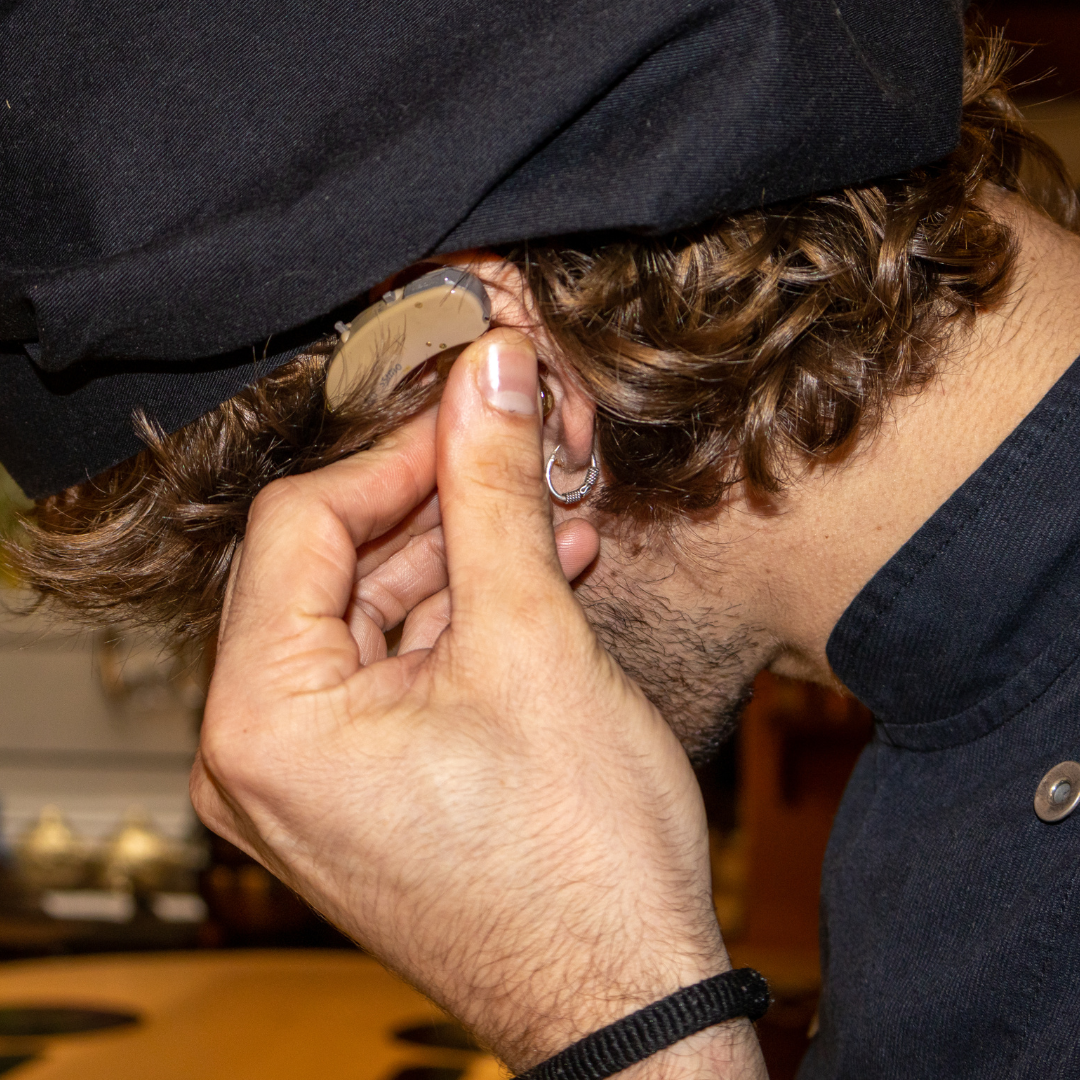
Tracking speech in busy dining venues can feel exhausting when environmental noise drowns out your hearing. Our practice can evaluate hearing in both quiet and noisy conditions to identify what makes these environments difficult. Once the diagnostic etiology of your difficult hearing is established, we implement personalized clinical and technological strategies.
Why Everyday Hearing Fails in Busy, Noisy Restaurants
Quiet rooms provide a favorable signal-to-noise ratio, meaning a speaker’s voice is much clearer than the sounds around it. Busy dining establishments generate the exact reverse scenario. Overlapping chatter, piped music, kitchen clatter, and hard-surface reverberation mask speech, forcing the brain to expend immense cognitive effort to track conversation.
These communication barriers frequently indicate high-frequency hearing loss, central auditory-processing disorders, or age-related sensorineural changes. Attention, fatigue, dim lighting, and distance from the speaker may make it worse. Some patients pass standard pure-tone evaluations with normal scores yet exhibit substantial impairment during specialized speech-in-noise testing. Inability to track speech in crowded restaurants merits audiological evaluation even when standard daily hearing sounds completely normal.
How Audiologists Identify High-Frequency Hearing Loss
We begin by reviewing your history of communication difficulties, prior noise exposures, ringing or tinnitus, pharmaceuticals, and unilateral symptoms.
Clinical pure-tone audiometry identifies hearing threshold levels across various frequencies by delivering sounds through air and bone pathways. Patients with high-frequency hearing loss typically exhibit a sloping audiogram configuration where sensitivity steadily declines at elevated pitches. Supplementary assessments routinely include diagnostic tympanometry to analyze middle-ear status alongside word-recognition testing to determine speech clarity.
A quiet sound booth cannot replicate complex dining room acoustics, which makes clinical speech-in-noise testing especially informative. It calculates your ability to identify verbal phrases as competing background noise levels rise. Together, these audiological findings indicate whether the issue involves sound audibility, speech intelligibility, noise-processing dysfunction, or multiple compounding factors.
Adult Auditory Processing Disorders and Speech Perception
A central auditory processing disorder disrupts the neurological transmission and cognitive interpretation of sound waves. A patient’s ears may demonstrate normal pure-tone sensitivity, but their central processing system struggles to separate background babble, distinguish consonant sounds, or follow swift discussions. We systematically verify peripheral hearing health before establishing whether an advanced auditory-processing evaluation or medical referral serves your needs.
Behavioral Strategies for Hearing Clearly in Loud Venues
Simple situational adjustments enhance the speech signal entering your ears and offer clearer facial cues. When planning to dine out, select restaurants with calmer atmospheres or arrange reservations during off-peak hours. Dining locations utilizing sound-absorbing elements like booths, felt panels, window curtains, and carpet offer better acoustics than high-ceilinged rooms with hard surfaces.
Practical seating strategies in the dining room:
- Select a secluded table situated away from prep kitchens, crowded bar stations, loudspeaker zones, and large parties.
- Situate yourself with a structural wall behind you to minimize distracting ambient noise from behind.
- Seat yourself facing conversation partners under clear, bright lighting to facilitate visual speechreading.
- Keep conversational proximity as close as comfortably feasible to preserve acoustic signal strength.
- Position your better-hearing ear directly toward your main conversational partner.
- Instruct conversational partners to reword missed phrases instead of repeating the entire sentence verbatim.
- Confirm important details rather than pretending to understand.
- Allow yourself a short listening respite when auditory concentration starts to feel drained.
- Invite companions to focus on clear articulation and a measured, comfortable cadence.
- Shouting can distort speech and does not necessarily make words easier to understand.
The Best Hearing Devices for Overcoming Restaurant Noise
Optimal technological solutions depend entirely on the etiology of your symptoms, target acoustic spaces, and whether measurable hearing loss exists. Prescription hearing aids fitted by an audiologist leverage directional microphone arrays, advanced digital noise reduction, and dedicated restaurant programs to focus on frontal speech while dampening background sound. Maintaining realistic expectations remains essential, as no auditory device can isolate conversation by removing all surrounding voices.
Pairing your devices with a remote wireless microphone generates a substantial improvement in the direct signal-to-noise ratio. Clipped near the speaker’s mouth or set nearby, the transmitter sends voice signals wirelessly to matched hearing aids or a receiver. This reduces the effects of distance and surrounding noise.
Further practical hearing technology options include:
- Table microphones for small-group conversations
- Built-in telecoils linking directly with induction hearing-loop systems in public venues
- Mobile device live-captioning programs and speech-to-text transcription software
- Over-the-counter hearables equipped with directional speech-enhancement algorithms
- Acoustic sound-meter apps and dining review directories that score restaurant noise
We analyze suitable devices, verify functional compatibility with your current setup, and guide you through real-world operation.
Professional Audiological Solutions for Loud Listening Environments
Undergoing a formal hearing evaluation takes your care beyond the limited baseline of hearing adequately in quiet spaces. We analyze the exact social venues, voice registers, and noise environments that cause difficulty to administer tests matching your lifestyle. The diagnostic battery may encompass pure-tone thresholds, acoustic middle-ear evaluations, suprathreshold word recognition, and speech-in-noise measures. Dedicated central auditory-processing testing will be scheduled if your history and primary diagnostic testing indicate central pathway issues.
Rapidly progressing, asymmetrical, or sudden hearing decline warrants an urgent clinical referral to an ear, nose, and throat physician. Tailored audiological treatment identifies the exact origin of listening breakdown rather than assuming environmental dining noise is the sole culprit.
Arrange a Hearing Evaluation With Us Now
If struggling through dinner conversation leaves you mentally exhausted, detached, or constantly guessing, schedule a complete hearing evaluation with our clinic. We will help you navigate hearing in noisy environments by implementing advanced hearing aid options, assistive accessories, or therapeutic auditory strategies tailored to your lifestyle.
Reach out to our audiology clinic today to schedule an evaluation and begin enjoying clear, effortless conversations.